Kestrel’s Vector Deck Mk II trades an hour of battery for a screen you can read outdoors
A brighter panel, a deeper grip and a fan that finally stops whining. Kestrel’s second handheld is a refinement rather than a reinvention, and the battery pays the bill.
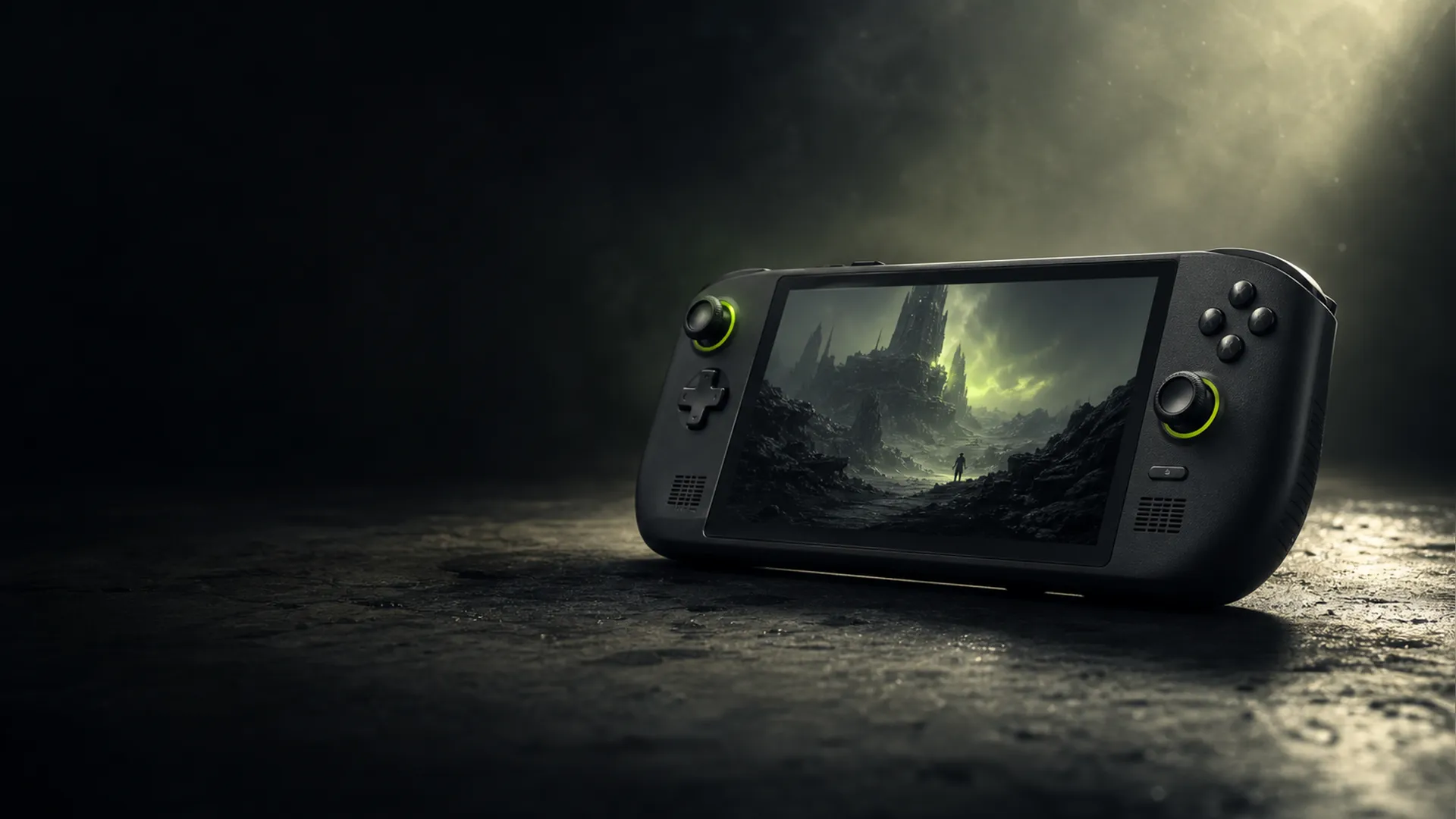
Kestrel Systems has revealed the Vector Deck Mk II, and the headline is a panel: 800 nits of sustained brightness, up from 340 on the original, in a handheld that people mostly bought in order to play on trains and in gardens.
That is the whole pitch, and it is a better pitch than it sounds. The first Vector Deck was a well-judged machine undermined by a screen that washed out the moment daylight touched it. Kestrel has spent two years being told this at every event it attended, and the Mk II reads as a direct, slightly grudging response to the complaint.
Everything else is iteration. The chassis is 4mm deeper through the grips, which sounds like nothing and completely changes how the thing sits in a large hand. The analogue sticks have been raised and given a coarser texture. The rear buttons, widely disliked for sitting exactly where your middle fingers rest, have moved inboard by about a centimetre and now require a deliberate press. The fan curve has been retuned so the machine no longer spins up audibly on a menu screen.
Internally, the changes are smaller than the two-year gap suggests. The system-on-chip is a refresh of the same architecture rather than a new one, offering what Kestrel describes as up to eighteen per cent better sustained performance — the word sustained doing a lot of work, since it is mostly a thermal headroom gain rather than a raw clock gain. Memory is unchanged at 16GB. Storage starts at 512GB, and the slower 256GB model is gone entirely, which is the quiet reason the entry price has moved up.
The battery is the trade
Kestrel quotes between three and seven hours depending on workload. The original quoted four to eight. A brighter panel run brighter costs power, and the battery has not grown to compensate because the chassis had nowhere left to put one.
In practice this means a demanding open-world game at full brightness will not survive a long-haul flight, which it did not really do before either. What has changed is that you can now turn the brightness down to a level that still works outdoors, whereas on the original, outdoors meant maximum brightness or nothing.
The accessibility work is the underrated part
Kestrel has added system-level remapping that applies to every game rather than being left to individual developers, including the ability to bind a single physical input to a held combination. There is a per-title toggle for haptics, adjustable stick dead zones exposed in the operating system, and a high-contrast interface mode that survives a sleep cycle — three things the first machine either lacked or reset every time it woke up.
None of this will lead a marketing beat, and all of it is more consequential to more people than an eighteen per cent thermal gain. It also, usefully, sets a floor that developers can now rely on rather than reimplement.
Who this is for
If you own the original Vector Deck and mostly play indoors, there is very little here. If you own it and have ever squinted at it on a balcony, this is the machine you thought you were buying the first time.
If you own neither, the interesting question is what you intend to play. The handheld’s best library is still the small stuff — the four-to-eight-hour games that suit a device you pick up for twenty minutes. Paper Lanterns, which we reviewed recently, is close to a perfect fit for it, and our review of Paper Lanterns goes into why that particular kind of game and that particular form factor keep finding each other.
Kestrel has given a launch window rather than a date, and has said the original model stays on sale at a reduced price for as long as stock lasts.